Home › Units › Necrons › C'tan Shards
 1 / 4 · Click to enlarge
Lore & origins
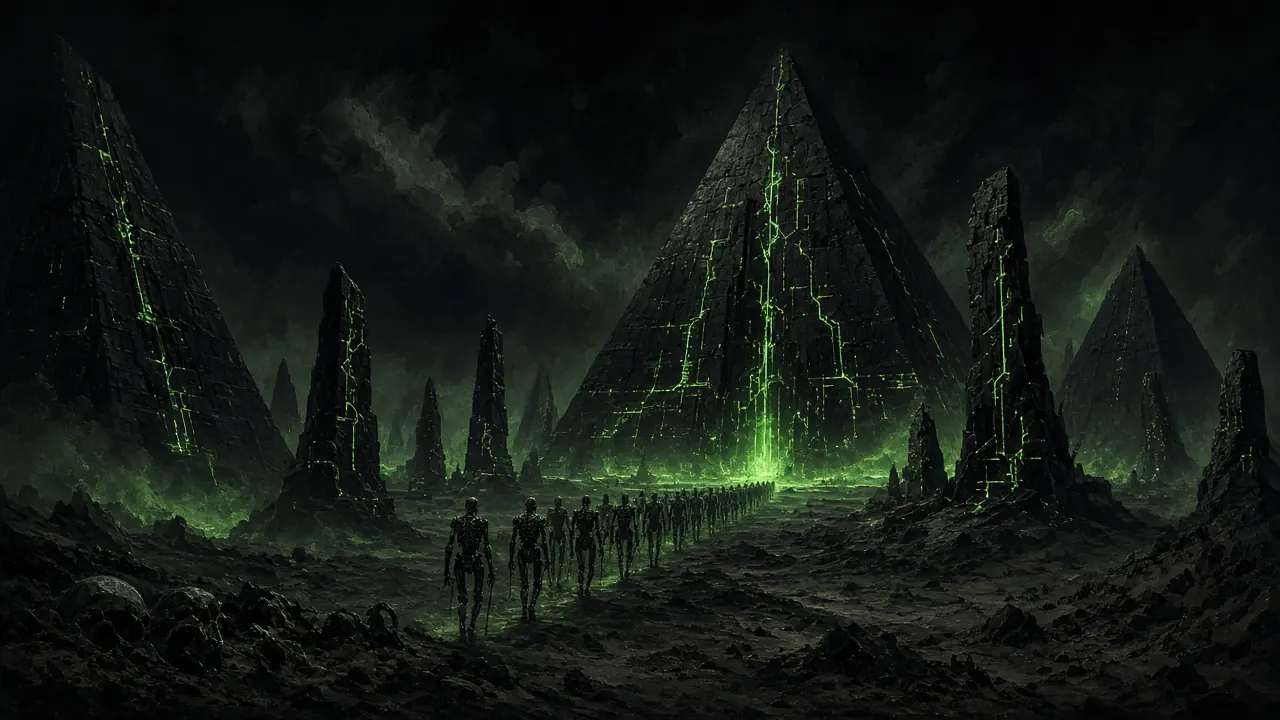
The C'tan, the Star Gods, are said to be among the oldest intelligent beings in the galaxy, born at the moment of creation from its first insensate energies. At first they were monstrous energy parasites that drifted across the surfaces of stars and fed on their light, and later learned to travel on diaphanous wings of electromagnetic flux. The Necrontyr forged bodies for them from the living metal necrodermis, in the shapes of their own half-forgotten gods. Clothed in matter, the C'tan acquired a new hunger for the life energies of mortals. Silent King Szarekh accepted their alliance despite the warning of his astrologer Orikan. Through biotransference the Necrontyr became the soulless Necrons, while the C'tan circled the bio-furnaces and gorged on the souls of an entire species.
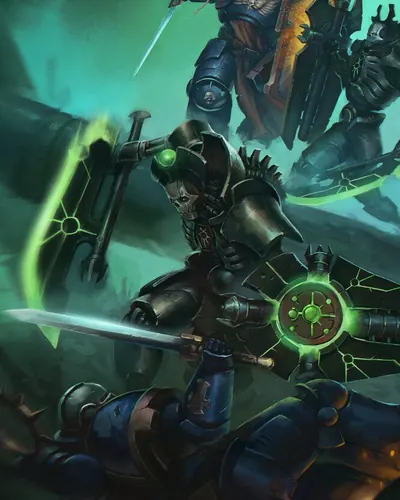
When the War in Heaven was won and the C'tan were spent, Szarekh led the Necrons in revolt. Crypteks devised god-killing hypercannons, and the forces unleashed damaged causality itself. The Silent King later erased knowledge of these weapons from his warriors' minds. But the C'tan were part of reality's fabric and could not be truly destroyed. Instead each was sundered into thousands of lesser fragments, and every one of these C'tan Shards was bound inside a multidimensional Tesseract Labyrinth, like a djinn in a bottle. Millions of Necrons died in the rebellion, along with every member of the Triarch except Szarekh.
Today the Shards are echoes of their former selves, held in unbreakable servitude to their former slaves and unable to act without commission. If a Shard rebels or its control relays fail, fail-safes whisk it back to its tomb to languish for centuries. Even so, the Necrons are wary of them. The chance of escape is remote but real, so the day must be dark indeed before the Labyrinths are opened. Most of the Shards met in the 41st Millennium have come from Aza'gorod the Nightbringer and Mephet'ran the Deceiver.
Appearance & wargear
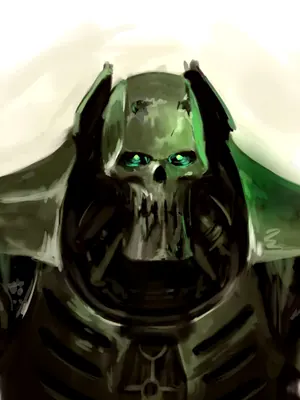
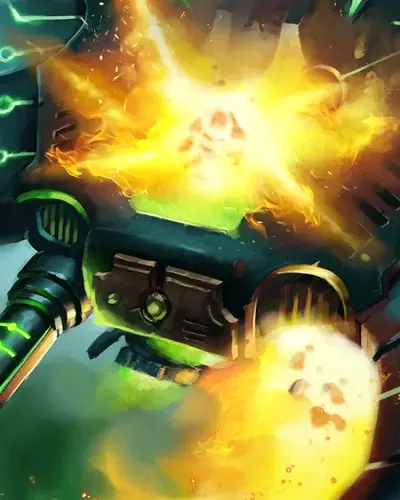
A C'tan Shard wears a body of necrodermis, the living metal that the Necrontyr once used to clad their torch-ships, cast in the image of the half-forgotten gods of that long-dead people. Into such shells the Star Gods' incomprehensible energies were compressed, and each Shard's body still cages a splinter of that star-born essence. The only way to defeat a Shard is to breach that shell. If it is compromised, the Shard explodes in a pulse of blinding energy and its being is scattered on the solar winds.
Weapons & Vehicles
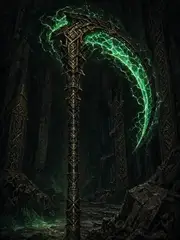
The dimensional-phasing polearms and emerald energy blades of Necron Overlords, Lychguard and Skorpekh Destroyers, slipping effortlessl…
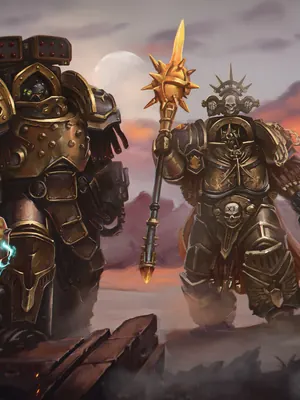
The arcane techno-sorcerous sceptres of Necron Crypteks and Overlords, unleashing searing bolts of captured stellar radiation while ser…
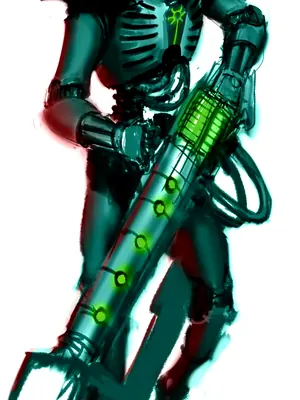
The iconic emerald molecular-flaying beam rifle of the Necron legions, stripping flesh, bone and tank armour apart atom by atom in a bl…
Explore all 48 entries in the Weapons & Vehicles armoury.
Battlefield role & tactics
Shards are the Necron dynasties' greatest battlefield weapons. Even fettered, they can hurl energy blasts and transdimensional thunderbolts, dominate lesser minds, twist the flow of time, bend gravity into singularities and banish foes into alternate realities. Their only limits are their vast imagination and the faint memory of the god they were split from. A Shard keeps its parent's personality and hubris, so it may ignore a tank it could melt with a gesture and instead devolve the crew into primordial ooze, or trick them into firing on their allies.
Munitorum & Ordo Xenos Technical Dossier
Classified under Ordo and Departmento Munitorum threat-index protocols as a primary Shards are the Necron dynasties' greatest battlefield weapons. Even fettered, they can hurl energy blasts and transdimensional thunderbolts, dominate lesser minds, twist the flow of time, bend gravity into singularities and banish foes into alternate realities. Their only limits are their vast imagination and the faint memory of the god they were split from. A Shard keeps its parent's personality and hubris, so it may ignore a tank it could melt with a gesture and instead devolve the crew into primordial ooze, or trick them into firing on their allies. asset of Necrons, C'tan Shards relies on a tightly coupled symbiosis between operator conditioning and primary armament. Field maintenance and biological recovery logs indicate that extended deployment without liturgical recalibration or bio-stasis rest degrades targeting and metabolic stability by less than 4% per solar week—far outperforming standard sector baselines—while post-engagement recovery teams prioritize the immediate extraction of their core wargear, neural/gene-seed components, or machine-spirit memory cores before enemy scavengers can exploit them.
Notable battles & users
- Known Shards: the Nightbringer, the Deceiver, the Void Dragon, the Burning One, the World Shaper, the Potenate and the Silent Cry.
- Transcendent C'tan: an aggregate of a dozen to a hundred Shards, held by the energy shackles of the ancient artificer Svarokh and contained in a Tesseract Vault.
- Conflicting records: the Black Library, Ulthwé and Alaitoc disagree on how many C'tan survive. It might be four, four thousand or anything in between.
- Orikan's warning: the court astrologer alone opposed the C'tan alliance, foretelling a renaissance of glory but the end of the Necrontyr soul.
Related
Characters (2)
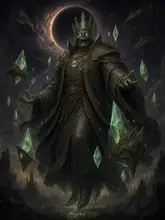 Szarekh, the Silent King · Last of the Silent Kings
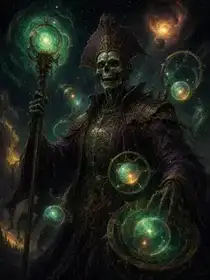 Orikan the Diviner · Cryptek Chronomancer, Astromancer of the Triarch