Home › Units › Drukhari › Wracks
 1 / 4 · Click to enlarge
Lore & origins
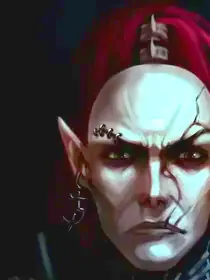
Wracks are the handiwork of the Haemonculi, the fleshcrafters of Commorragh. Each is a Drukhari who has been dissected and rebuilt as a living instrument of torture, an example of their master's surgical artistry. Some circles call them "Haemacolytes". They serve as assistants, servants and bodyguards. They tend the laboratories, hold down and cut open the subjects on the slab, and in battle defend their creators with their lives. Haemonculi lean towards megalomania and even delusions of godhood, and most think themselves polluted by physical labour of any kind. So the Wracks do the dirty work. A typical scene in a Haemonculus's oubliette is one figure looming over a half-dissected victim while hunched Wracks scrabble to obey every disturbing command.
The most sickening thing about a Wrack is not its appearance or its simmering bloodlust but that it chose this fate. After a few centuries of life in the Dark City, many Drukhari ask to be remade into a form other than the one they were born with. Voluntary surgery staves off the ennui that gnaws at their kind and opens up whole new realms of experience and debauchery. A Drukhari with nothing left to lose may give themselves to the Haemonculi and emerge as something far more frightening. Once remade, a Wrack will endure almost any degradation in the hope of one day ascending to the ranks of the Coven lords themselves.
Within their surgically enhanced frames lies shocking strength, pumped further by steroids and drugs. Beyond their menial duties, the Covens use them as frontline shock troops in realspace raids. They pillage communities for fresh specimens to stock the laboratories and fight with sickled blades, corrosive whips, stun-rods and silvered hooks.
Appearance & wargear
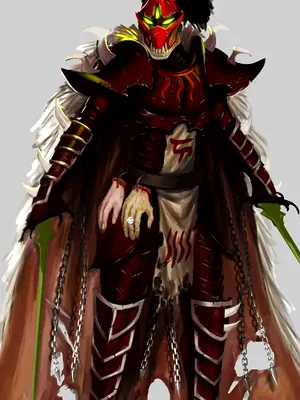
Inscrutable metal masks cover Wracks' faces, because individual identity has no place in their existence. Day to day they wear little more than stained butcher's aprons and tabards, with a bewildering array of torturer's tools hanging from their belts. Their finger- and toenails are cut away and replaced with razor talons that skitter on the cold stone floors of their needle-lairs. Many have heavy metal gauntlets grafted in place of hands, which inject or draw fluids with the flex of a wire-taut tendon and can be coated in searing venom for a raid. Spinal grafts and rampant bone growth form baroque external racks and hooks from which they hang samples and serums, ready for their master's use.
Weapons & Vehicles
The nerve-shredding neural whips and moisture-vaporising Huskblades of Drukhari Archons and Succubi, turning close combat into an arena…
The cruel crystal-toxin firearms of the Drukhari Kabals, firing storms of venomous shards designed to kill targets in maximum, soul-nou…
The corroded, pus-dripping combat blades of the Death Guard Plague Marines, so saturated with Nurgle's supernatural contagions that a s…
Explore all 48 entries in the Weapons & Vehicles armoury.
Battlefield role & tactics
Wracks are tough, pain-hardened infantry who guard Haemonculi and hold ground for the Covens. A squad of four Wracks is led by an Acothyst, a rank that seems to work like a junior officer's and is rewarded with exotic weapons. These include the hexrifle, whose crystal cylinders hold the Glass Plague that turns flesh to glass, the flesh gauntlet and the scissorhand. For every five Wracks, one may carry a liquifier gun or an ossefactor, a fleshcrafting device turned weapon that makes a victim's bones grow uncontrollably.
Field Modifications, Sub-Faction Doctrines & Operational Idiosyncrasies
Within the strategic threat-indices of the Departmento Munitorum, the Ordo Xenos, and the high command savants of Drukhari, Wracks are classified as a premier elites asset whose battlefield effectiveness stems from the tight integration of operator conditioning and specialized wargear. Pouring from Webway portals aboard knife-prowed antigravitic skiffs to slake the soul-withering curse of She Who Thirsts, Commorrite Kabals, Wych Cults, and Haemonculus Covens fight to maximize prolonged neurological agony. In active campaign theatres, Inscrutable metal masks cover Wracks' faces, because individual identity has no place in their existence. Day to day they wear little more than stained butcher's aprons and tabards, with a bewildering array of torturer's tools hanging from their belts.
Veteran formations of Wracks develop distinct sub-faction doctrines and field modifications over decades of continuous deployment. In the 5th edition background, Wracks' arms are usually replaced outright by blades, metal claws or other tools, after their bodies have been cut into pieces and reassembled. Whether fighting in void-ship boarding actions, ash-waste tank duels, or ruined hive-city basilicas, experienced crews and squad leaders strip away parade-ground redundancies to maximize ammunition feed reliability, target-acquisition speed, and close-quarters survivability under extreme suppression.
Field maintenance and biological or machine-spirit recovery logs confirm that sustained combat exacts a heavy toll on both wargear and flesh, yet Wracks maintain operational cohesion long after standard line units would collapse. Following every major engagement, recovery teams prioritize the immediate extraction of their core panoply, veterancy honors, and consecrated components so that the lineage and lethal institutional memory of the formation endure into the next warzone. When integrated into combined-arms task forces, their vox-and-auspex telemetry feeds directly into theatre command nets, allowing flanking reserves to exploit the breaches they carve through fortified enemy lines.
Heraldry, Battle-Damage & Community Artistry
Across the Warhammer 40,000 illustration, Golden Demon painting, and display-diorama community, Wracks stand out as one of the most rewarding subjects in the Drukhari range. Artists and miniature painters focus intently on their signature visual hallmarks: razor-edged obsidian-green, deep violet, or bone-plated armour highlighted along every cruel barb, pale bloodless skin tones, and glowing toxic-emerald vials and splinter-crystal tubes. Combined with the distinct silhouette described in field sightings—Inscrutable metal masks cover Wracks' faces, because individual identity has no place in their existence—every model and canvas painting offers a rich interplay of texture between rigid armour plates, weathered cloth or chitin, and gleaming weapon assemblies.
When depicting Wracks at the height of battle, community artists and painters push contrast through sponge-chipped battle damage, directional mud and ash pigments across the lower greaves or hull tracks, and vivid Object Source Lighting (OSL) cast by active lenses, energy coils, or muzzle flashes. Sub-faction heraldry, campaign badges, and trophy details allow hobbyists to anchor each miniature or illustration in a specific canonical warzone—celebrating both the grimdark complexity of the Forty-First Millennium and the craftsmanship of the community that brings Drukhari to life.
In competition dioramas and Golden Demon cabinet entries, hobbyists also pay close attention to the basing and atmospheric storytelling surrounding this formation: scorched industrial deck-plating, shattered imperial aquilas, spent brass shell casings, or glowing xenos crystal outcrops are color-keyed to complement the primary armour palette, ensuring that the silhouette reads instantly from across the tabletop while rewarding close-up inspection with layers of narrative detail.
Notable battles & users
- Acothyst Mydilian: a named Acothyst recorded among the Covens.
- Haemoxytes: the title given to the most favoured Wracks.
- The ossefactor: built for shaping bone and fashioning spinal sumps, and now pressed into military service.
- Mindphase gauntlet: an Acothyst weapon said to be able to stop even a Tyranid Carnifex by sapping its will.
Related
Characters (1)
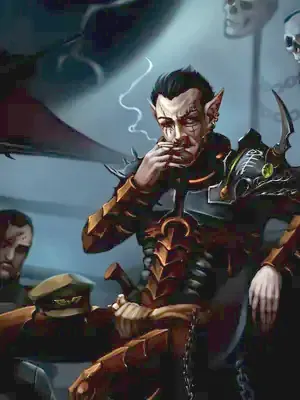 Urien Rakarth · Master Haemonculus of the Prophets of Flesh