Home › Units › Adeptus Astartes (all Chapters) › Centurions
 1 / 4 · Click to enlarge
Lore & origins
The Centurion warsuit is a massive exoskeleton that a Space Marine climbs into while still wearing power armour. Imperial scholars disagree about when it was first used. Its origins lie in the Age of Apostasy, and Centurions appear clearly in Imperial records during the crusades of the Age of Redemption. The first Chapters to adopt them, after pacts with the Adeptus Mechanicus, were the Imperial Fists and the Iron Hands.
The Imperial Fists used them as the spearhead of their planetary assaults, dropping them from orbit to break through fortresses. The Iron Hands, with their love of machines, took to the warsuits easily. Today many Chapters keep Centurions in their armouries.
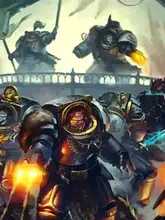
Centurions are Space Marines in Centurion warsuits, heavy siege armour worn over power armour. They were introduced in the sixth-edition Space Marines codex. Assault Centurions carry siege drills and flamers, and Devastator Centurions carry grav-cannons, lascannons and missile launchers.
The Centurion warsuit's background goes back to the Age of Apostasy, when the High Lords sought brutal new tools for breaking fortified rebels. The Mechanicus sent out the Voyages of Understanding in search of ancient knowledge. The two approved warsuit patterns were not ready in time for that war, and the Tech-priests guarded them as secrets for years afterward. A Centurion suit does not connect to the Black Carapace. It is an exoskeleton worn over power armour, and the pilot crosses his arms over his chest and controls it entirely through neural links. Suits that prove too powerful are quickly withdrawn by the Tech-priests for "decommissioning."
Appearance & wargear
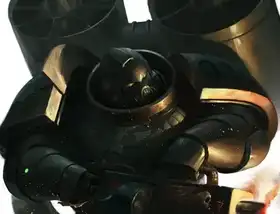
A Centurion is wider than a Terminator, with a pilot visible in power armour inside a heavy frame of thick plates and armoured legs. Devastator Centurions carry grav-cannons with grav-amps, or heavy bolters or lascannons, plus a hurricane bolter or missile launcher on the chest. Assault Centurions carry siege drills on both arms, with flamers or meltaguns mounted alongside.
They wear bulky, armoured suits with weapon arms and shoulder-mounted launchers.
Weapons & Vehicles
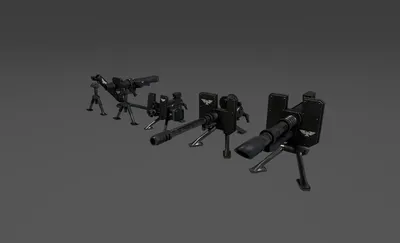
The Imperium's premier long-range anti-tank laser cannon, firing a blinding lance of coherent light that punches cleanly through battle…
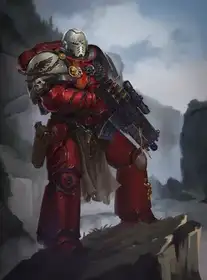
A belt-fed 1.0-calibre automatic support cannon known to Imperial troops as the "Backbreaker," scything down massed infantry and light …
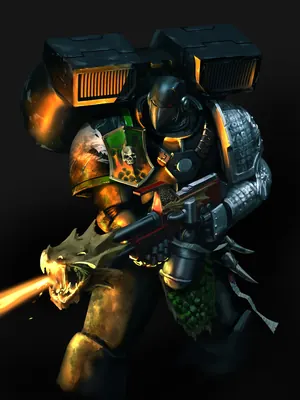
A short-ranged thermal sub-molecular agitation weapon that flash-melts battle tank armour, bunker doors and heavy walkers into bubbling…
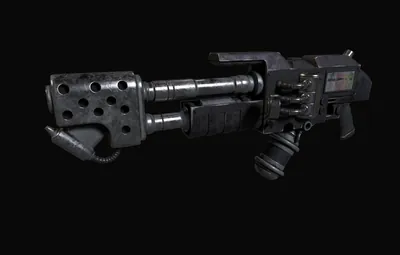
A volatile liquid-promethium projector that floods bunkers, trenches and xenos swarms in clinging, self-oxidising gouts of cleansing ch…
The signature .75-calibre rocket-propelled mass-reactive firearm of the Adeptus Astartes, firing self-propelled explosive bolts that de…
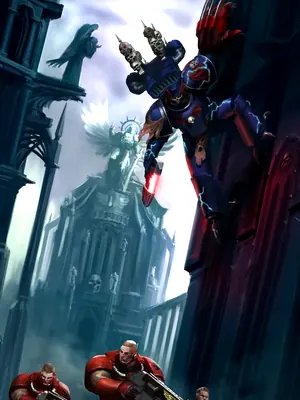
A heavily armed VTOL assault gunship and flying transport of the Adeptus Astartes and Grey Knights, capable of carrying both a full squ…
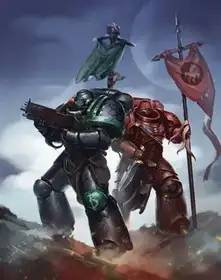
Space Marine heavy weapons teams that provide long-range fire support with lascannons, missile launchers and heavy bolters.
Explore all 48 entries in the Weapons & Vehicles armoury.
Battlefield role & tactics
Assault Centurions are siege-breakers. They walk up to walls and bunkers and drill straight through them. Devastator Centurions provide crushing heavy fire. Their grav weapons are especially deadly against heavily armoured targets. Centurions are slow, so they often travel in Land Raiders.
Centurions are siege specialists. They break fortifications and destroy heavy targets. They are tough but slow.
Assault Centurions use siege drills to break bunkers, walls and heavy armour. Devastator Centurions use heavy weapons guided by the suit's machine spirit. Veterans are often unsuited to the work, because their experience is better used elsewhere and the suits are too bulky for many battles. Centurions are slow and need transports such as Land Raiders. Their great strength is durability.
Field Modifications, Sub-Faction Doctrines & Operational Idiosyncrasies
Within the strategic threat-indices of the Departmento Munitorum, the Ordo Xenos, and the high command savants of Adeptus Astartes (all Chapters), Centurions are classified as a premier heavy support asset whose battlefield effectiveness stems from the tight integration of operator conditioning and specialized wargear. Within the Codex Astartes and divergent Chapter strike forces, Techmarines and Company Apothecaries monitor the black-carapace neural coupling, Larraman-cell clotting cascades, and auto-sense target-locks of every battle-brother or machine chassis. In active campaign theatres, A Centurion is wider than a Terminator, with a pilot visible in power armour inside a heavy frame of thick plates and armoured legs. Devastator Centurions carry grav-cannons with grav-amps, or heavy bolters or lascannons, plus a hurricane bolter or missile launcher on the chest.
Veteran formations of Centurions develop distinct sub-faction doctrines and field modifications over decades of continuous deployment. Centurions were introduced in the sixth-edition Space Marines codex. Whether fighting in void-ship boarding actions, ash-waste tank duels, or ruined hive-city basilicas, experienced crews and squad leaders strip away parade-ground redundancies to maximize ammunition feed reliability, target-acquisition speed, and close-quarters survivability under extreme suppression.
Field maintenance and biological or machine-spirit recovery logs confirm that sustained combat exacts a heavy toll on both wargear and flesh, yet Centurions maintain operational cohesion long after standard line units would collapse. Following every major engagement, recovery teams prioritize the immediate extraction of their core panoply, veterancy honors, and consecrated components so that the lineage and lethal institutional memory of the formation endure into the next warzone.
Heraldry, Battle-Damage & Community Artistry
Across the Warhammer 40,000 illustration, Golden Demon painting, and display-diorama community, Centurions stand out as one of the most rewarding subjects in the Adeptus Astartes (all Chapters) range. Artists and miniature painters focus intently on their signature visual hallmarks: edge-highlighted Mk X Tacticus, Gravis, or classic Mk VII ceramite plate, freehand squad tactical arrows and company trim on the pauldrons, parchment purity seals with micro-scripted wax stamps, and glowing green or ruby helmet eye-lenses. Combined with the distinct silhouette described in field sightings—A Centurion is wider than a Terminator, with a pilot visible in power armour inside a heavy frame of thick plates and armoured legs—every model and canvas painting offers a rich interplay of texture between rigid armour plates, weathered cloth or chitin, and gleaming weapon assemblies.
When depicting Centurions at the height of battle, community artists and painters push contrast through sponge-chipped battle damage, directional mud and ash pigments across the lower greaves or hull tracks, and vivid Object Source Lighting (OSL) cast by active lenses, energy coils, or muzzle flashes. Sub-faction heraldry, campaign badges, and trophy details allow hobbyists to anchor each miniature or illustration in a specific canonical warzone—celebrating both the grimdark complexity of the Forty-First Millennium and the craftsmanship of the community that brings Adeptus Astartes (all Chapters) to life.
Notable battles & users
- Imperial Fists: Chapter companies used Centurions to spearhead orbital assaults against fortresses.
- Iron Hands: among the earliest Chapters to adopt the warsuits.
- Ultramarines: Centurions with siege drills appear in Ultramarines imagery in the 6th edition codex.
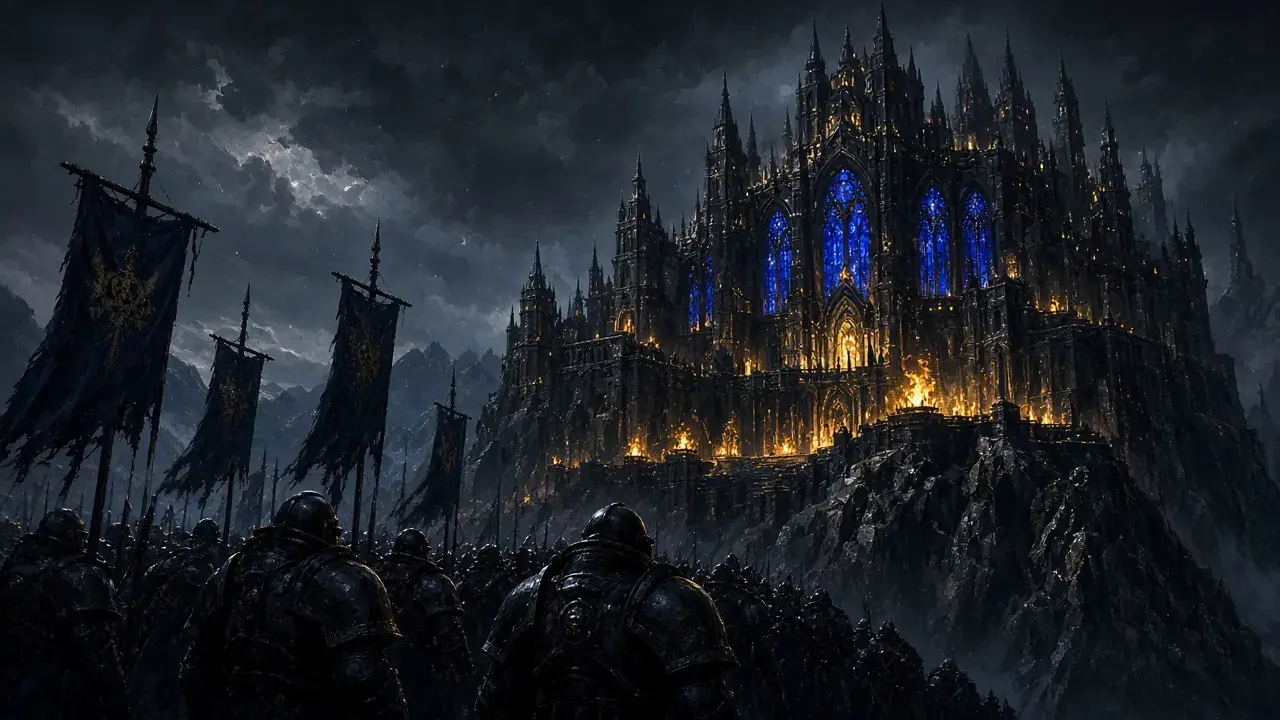
- The Centurion Siegebreaker Cohort: credited with bringing down the Ironfang Spire, the Impenetrabulum Obstinus and the Nightmare Citadel of Morrowmire.
Related
Characters (2)
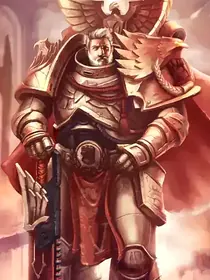 Rogal Dorn · Primarch of the Imperial Fists, Praetorian of Terra
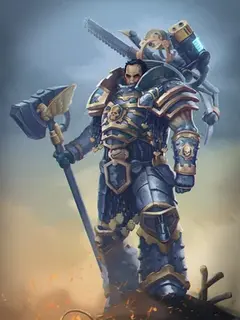 Ferrus Manus · Primarch of the Iron Hands, the Gorgon